Emergency Dentist Care for Teeth Damaged in Workplace Accidents
A workplace injury can turn an ordinary shift into a medical emergency in seconds. When the face or mouth takes the impact, people often focus first on bleeding, swelling, or the shock of what just happened. Teeth, however, can suffer damage that is easy to underestimate in the moment and expensive to ignore later. A chipped edge may hide a nerve injury. A tooth that looks only slightly out of place may lose its blood supply. A blow that seems minor can trigger pain, infection, or tooth loss days afterward.
This is where prompt care matters. An Emergency Dentist does more than relieve immediate pain. The right treatment in the first few hours can preserve a tooth, reduce the risk of infection, protect the bite, and create a much better long-term outcome. In work-related accidents, timing, documentation, and the sequence of care all matter, especially when workers’ compensation, safety reporting, and return-to-work planning enter the picture.
Dental injuries at work rarely happen in ideal conditions. I have seen injuries from warehouse falls, construction debris, slips on wet kitchen floors, elbows during patient transfers in healthcare settings, and sudden impacts from tools that kicked back. Each case looks a little different, but one truth holds across all of them: a damaged tooth should never be treated as a cosmetic afterthought.
Why workplace dental injuries are different
A broken tooth from biting down on ice at home is one thing. A fractured or displaced tooth after a job-site accident is another. The force involved is often greater, the injury pattern is more complex, and the chance of accompanying soft tissue or jaw trauma is higher. In the workplace, there is also pressure to “push through,” finish the shift, or wait until the pain becomes unbearable. That delay can cost someone a tooth.
Workplace accidents also create layers of practical concern that do not come with routine dental problems. Employers need incident reports. Employees may need urgent referral pathways. There can be questions about whether the person should be seen in an emergency room first, by a dentist first, or by both. If there is facial numbness, difficulty opening the mouth, or concern about concussion, the answer may not be straightforward.
An Emergency Dentist is particularly valuable because dental trauma assessment is not just about what is visible. Teeth can crack below the gumline. Roots can fracture without obvious external damage. The surrounding bone can be injured even when the crown looks mostly intact. A good emergency evaluation includes the bite, the pulp response, mobility, gum injury, radiographs when indicated, and a plan that accounts for what may evolve over the next days and weeks.
The kinds of accidents that cause serious tooth damage
The obvious high-risk industries are construction, manufacturing, logistics, mining, and agriculture, but dental trauma happens in office buildings, schools, restaurants, hospitals, and retail stores too. A fall onto a hard floor can do as much damage as a direct blow from equipment. So can an impact with shelving, vehicle doors, or another person.
Front teeth are the most commonly affected because they take the first hit. Upper front teeth are especially vulnerable in falls and forward impacts. Molars can fracture from blunt trauma to the jaw or from clenching during impact. I have also seen workers crack back teeth after a sudden collision caused the jaws to slam shut hard enough to split a cusp.
The severity ranges widely. A small enamel chip may need smoothing or bonding. A deep fracture may expose dentin or pulp, causing sharp pain to air, water, and pressure. A tooth can loosen, shift, intrude into the bone, or come out entirely. Soft tissue injuries matter too. Lip lacerations often hold tooth fragments, and cuts inside the mouth can distract from damage to the teeth themselves.
What needs immediate attention
When someone injures a tooth on the job, there are a few signs that should trigger same-day dental evaluation, even if the pain is still tolerable. Bleeding from around a tooth, visible movement, a change in tooth position, persistent sensitivity to air, difficulty biting down normally, missing fragments, or a tooth that has been knocked out all deserve urgent care. So does a tooth that turns darker after the accident, though discoloration may appear later rather than right away.
If there is heavy facial bleeding, loss of consciousness, vomiting, severe jaw pain, trouble breathing, or a possible head or neck injury, emergency medical care comes first. Dental treatment can follow once the person is medically stable. In many work accidents, both medical and dental evaluation are appropriate because the injury spans more than one system.
The first hour can shape the outcome
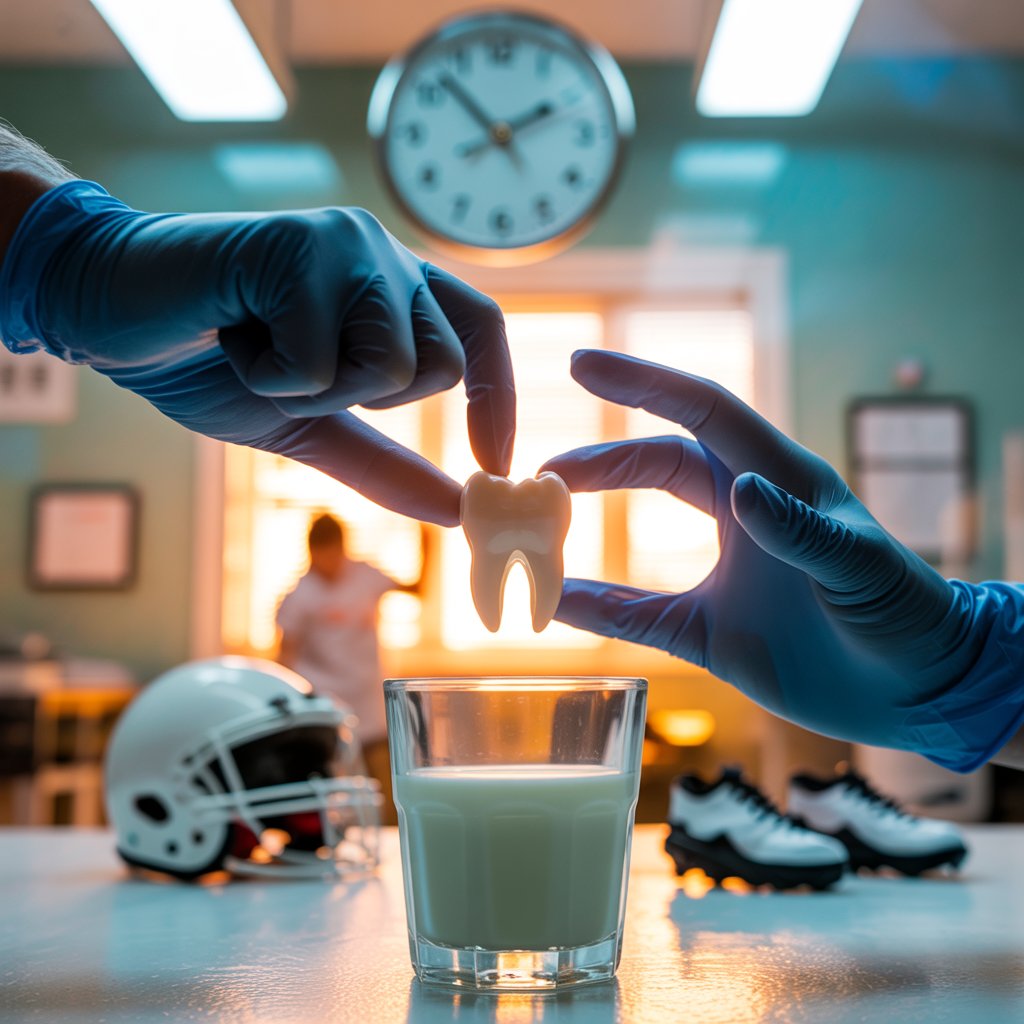
A tooth that has been avulsed, meaning completely knocked out, is the classic example of a true dental emergency. Reimplantation can be successful, but the window is narrow. Ideally, the tooth is replanted promptly or stored correctly and brought to an Emergency Dentist without delay. Dry time matters. The longer the root surface cells are allowed to dry out, the worse the prognosis becomes.
Luxated teeth, meaning those that are loosened or displaced but still in the socket, also benefit from fast care. Repositioning and splinting are often most effective when done early. Delays allow swelling, clot formation, and bite changes to complicate treatment.
What to do right away at the workplace
The immediate response should be calm and practical. Small mistakes in these first minutes can make treatment harder later.
- Control bleeding with gentle pressure using clean gauze or cloth.
- If a tooth has come out, handle it by the crown, not the root, and keep it moist in milk or saline if it cannot be reinserted immediately.
- Use a cold compress on the outside of the face to limit swelling.
- Avoid scrubbing, scraping, or wrapping an avulsed tooth in dry tissue.
- Arrange same-day care with an Emergency Dentist, while also following workplace injury reporting procedures.
Those steps sound simple, but under pressure they are often missed. The most common error I see is a knocked-out tooth carried in a dry napkin or pocket. Another is assuming a broken tooth can wait because “it’s only a chip,” when the fracture has actually exposed the nerve.
How an Emergency Dentist evaluates the injury
A proper trauma exam starts with the story of the accident. The mechanism matters. A fall from standing height produces different patterns than a steel object striking the face, and both differ from a motorized tool kickback. The dentist will ask when the injury happened, whether the tooth was found, how it was stored, whether the bite feels different, and whether there Emergency Dentist was any loss of consciousness or facial numbness.
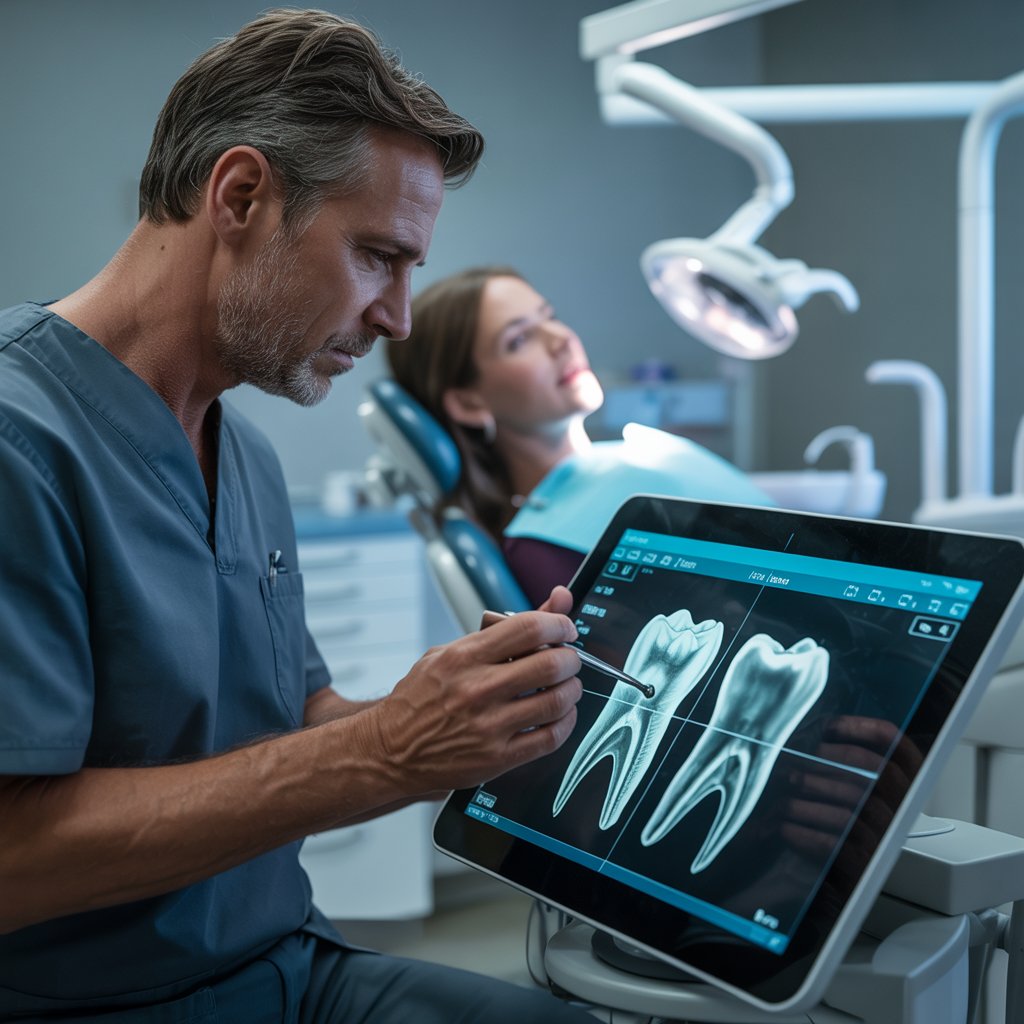
The clinical exam usually includes inspection of the teeth, gums, lips, and cheeks, checking mobility, percussion tenderness, bite alignment, and visible fractures. Radiographs help identify root fractures, bone injury, and the position of displaced teeth. In some cases, pulp testing is done, though immediately after trauma those results can be temporarily unreliable. A tooth may test “sleepy” and still recover, or seem stable at first and later deteriorate.
This is one reason trauma care is not a one-visit issue. A thoughtful Emergency Dentist will explain both the urgent treatment and the need for follow-up. Teeth that survive the first day still need monitoring over weeks and months for nerve death, internal resorption, infection, or bite complications.
Common treatments after workplace tooth injuries
Treatment depends on what actually happened to the tooth and supporting structures. There is no single standard fix.
A minor enamel chip may need only polishing if the edge is rough and the appearance is acceptable. More often, a bonded composite repair is used because it restores shape quickly and conservatively. If the fracture extends into dentin, covering the exposed area helps reduce sensitivity and bacterial contamination.
For deeper fractures that involve the pulp, emergency treatment may include a pulp cap in select cases, pulpotomy, or root canal therapy, depending on the patient’s age, the tooth involved, and the depth and nature of the injury. Front teeth in younger patients sometimes get more conservative pulp-preserving approaches than older teeth with fully developed roots, but judgment is case-specific.
Loosened or displaced teeth are often repositioned and splinted to nearby teeth for stabilization. The splint is usually temporary and flexible rather than rigid. That distinction matters. Teeth heal better with some physiologic movement than with total immobilization in many trauma cases.
A completely avulsed permanent tooth may be replanted if conditions are favorable. The dentist cleans the area appropriately, confirms orientation, places the tooth back into the socket, and splints it. Tetanus status and antibiotics may come into the discussion depending on the contamination risk and the nature of the injury. Follow-up root canal treatment is commonly needed in many avulsion cases, especially with mature teeth.
If a tooth is fractured beyond repair, extraction may be the only realistic path. That can be hard for patients to hear, especially if the tooth was healthy before the accident. Even then, emergency care still matters because careful extraction planning, site preservation, temporary replacement options, and documentation all influence the final result.
Pain, swelling, and the myth of “wait and see”
People often judge dental injuries by pain alone. That can be misleading. Some badly injured teeth are surprisingly numb at first. Adrenaline blunts symptoms. Nerves can be damaged in ways that delay pain. Soft tissue swelling may overshadow the tooth itself.
On the other side, a dramatic-looking chip is not always the most serious problem. A person may fixate on the visible front tooth while an adjacent tooth has been driven into the bone or has a root fracture. Good trauma care means looking beyond the most obvious damage.
Swelling usually peaks later, often within 24 to 72 hours, and bruising may spread across the lip or under the eye depending on the impact location. That natural progression can make people feel their condition is suddenly worsening when in fact it is evolving as expected. What matters is whether function, pain, and signs of infection are improving or deteriorating under supervision.
Documentation matters more than most patients realize
In workplace cases, dental records do double duty. They guide treatment and support injury documentation. Timing, photographs, radiographs, tooth numbers, mobility grading, occlusion notes, and descriptions of soft tissue injuries can all become important if there is an insurance dispute or a question about whether later treatment is related to the original accident.
Patients should not have to turn themselves into claims specialists while in pain, but a few details are worth preserving early. The date and time of injury, where it happened, who witnessed it, what object or surface caused the impact, and what symptoms began immediately are all useful. If a tooth fragment was recovered, that should be noted. If the tooth was out of the mouth for a period of time, the estimated duration and storage method matter.
An experienced Emergency Dentist often understands this practical side of workplace trauma. Clear records help protect the patient from the all-too-common argument that a later root canal, crown, or implant was unrelated or “elective.” Traumatized teeth can fail months after the event. Good notes from day one make that easier to establish.
The injuries that tend to worsen later
Not every dental problem declares itself on the first visit. Some of the most frustrating work injury cases are the ones that look manageable at first and become more complex over time.
The following delayed issues are common enough that patients should know about them:
- Pulp necrosis, where the tooth loses vitality and later needs root canal treatment.
- Root resorption, an inflammatory or replacement process that can threaten the tooth months after trauma.
- Bite changes, especially after displaced teeth or jaw impact.
- Cracks that deepen under chewing forces and turn a repairable tooth into a non-restorable one.
- Cosmetic changes, including discoloration of front teeth after nerve injury.
This is why follow-up intervals matter. A patient may feel almost normal after a week and assume the danger has passed. Sometimes it has. Sometimes the real problem appears only after the bruising fades.
Front teeth, appearance, and the psychological side of injury
The clinical damage is only part of the story. A visible dental injury at work can be deeply unsettling. People who speak to customers, patients, clients, or teams all day may feel exposed and embarrassed, even when the pain is under control. I have seen workers more distressed by a shortened front tooth or a black triangle between teeth than by the initial laceration that brought them in.
That reaction is not vanity. Teeth affect speech, confidence, and social ease. Emergency care should recognize that. A temporary bonded repair done well on the first day can make an enormous difference to someone who needs to be back in public-facing work quickly. Even when a final crown or implant is months away, a sensible temporary solution helps restore normal life.
There are trade-offs, of course. In a severely traumatized tooth, the most beautiful cosmetic fix is not always the safest immediate choice. The dentist may intentionally delay definitive esthetic treatment to monitor pulp health, stabilize the bite, or allow soft tissues to heal. Patients usually accept that well when the rationale is explained clearly.
Special considerations for different types of workers
A machinist who wears a respirator, a nurse who speaks constantly, and a delivery driver who depends on concentration behind the wheel do not face the same practical challenges after a dental injury. Return-to-work advice has to fit the job.
For physically demanding work, bite pain and jaw soreness can worsen with straining, clenching, or lifting. For jobs involving dust or contamination, exposed oral wounds need extra attention. For workers who must wear helmets, masks, or face shields, swelling and pressure over the injured area may make standard equipment uncomfortable for a few days. Medications matter too. A person taking prescription pain medicine may not be safe for driving or operating machinery.
This is where a good emergency dental note can be genuinely useful. It may specify dietary restrictions, anticipated pain, follow-up needs, and temporary work limitations. That helps everyone, including the patient, the employer, and any occupational health team.
When tooth preservation is realistic, and when it is not
Patients often ask the same urgent question: “Can this tooth be saved?” The honest answer is sometimes, but not always. Saveability depends on far more than whether the crown is visible above the gumline.
If the fracture runs deep below the bone, if the root is split vertically, or if the supporting structures are destroyed, heroic measures may offer poor long-term value. In those cases, removing the tooth and planning a durable replacement may be better care than chasing a weak prognosis. An experienced clinician balances biology, function, cost, treatment time, and patient priorities rather than treating “saving the tooth” as an automatic moral victory.
That said, many teeth that initially look alarming can do well when treated promptly. Repositioned teeth can stabilize. Deep fractures can be restored. Avulsed teeth can sometimes serve for years, even when the long-term outlook is guarded. The key is informed judgment, not reflex optimism or unnecessary pessimism.
The role of follow-up after the emergency visit
The emergency appointment is the start of care, not the end. Trauma follow-up often includes repeat radiographs, vitality checks, splint removal if one was placed, occlusal adjustments, and decisions about definitive restoration. The timeline varies, but many injuries warrant review over several months. Some need annual monitoring after that.
This can feel excessive to patients who want the problem solved in one sitting. Yet trauma does not behave like routine dentistry. Teeth respond over time, and the supporting bone and ligament need a chance to declare how well they are healing. A careful dentist watches for subtle warning signs before they turn into bigger failures.
Follow-up is also where final planning happens. A bonded edge may later become a veneer or crown if esthetics or strength demand it. A root canal-treated front tooth may need internal bleaching or a full restoration. An extracted tooth may lead to a bridge, implant, or removable option depending on the site and the patient’s budget, schedule, and oral health.
Prevention belongs in the conversation too
Once the crisis settles, the workplace itself deserves a hard look. Mouthguards are underused outside organized sports, yet in some occupations they make excellent sense. So do face shields, better fall prevention, and stricter controls around flying debris. I have met workers who suffered avoidable dental trauma simply because eye and face protection was available but not worn, or because no one had thought through the risk of oral injury in a task that seemed routine.
Employers sometimes overlook dental trauma because it does not carry the same immediate drama as a deep laceration or broken limb. Emergency Dentist But the costs add up quickly. Emergency visits, restorative care, time away from work, follow-up imaging, and long-term replacement treatment can become substantial. Prevention is not just a safety slogan here. It is practical risk management.
Choosing the right emergency dental response
Not every dental office is equipped or willing to manage trauma well on short notice. Some offices excel at routine care but have limited same-day capacity for splinting, avulsion management, or complex injury assessment. Patients and employers should ideally know in advance where dental trauma can be referred locally.
A capable Emergency Dentist brings more than availability. They bring judgment about when to stabilize, when to refer, when to coordinate with medical services, and how to explain realistic outcomes without causing unnecessary alarm. That combination matters when someone arrives shaken, bleeding, and worried about both their health and their job.
The best results usually come from fast action, accurate diagnosis, and a treatment plan that respects both the biology of dental trauma and the realities of workplace injury claims. Teeth damaged at work deserve that level of care. When the response is timely and informed, many injured workers keep their teeth, return to function sooner, and avoid the cascade of preventable complications that so often follows delay.
Vitality Dental
1220 Coit Rd # 106, Plano, TX 75075, United States
+1 972-645-4100
FAQ About Emergency Dentist
What counts as a dental emergency?
A knocked-out tooth, significant mouth injury, severe tooth pain, or painful swelling warrants prompt evaluation. Call your dentist and describe your symptoms so the office can advise you on how urgently you need care.
What should I do if I knock out a permanent tooth?
Call a dentist immediately. Handle the tooth by the crown, avoid touching the root, and keep it moist. If you cannot put it back into the socket easily, transport it in milk or a tooth-preservation solution. Bring it with you to the appointment.
Should I go to the emergency room for a dental emergency?
Seek emergency medical care right away if you have trouble breathing or swallowing, uncontrolled bleeding, or a serious facial injury. For an isolated tooth injury or toothache without those symptoms, call a dentist promptly for guidance.